Disclosure: I sometimes earn products or commissions from affiliate links or partnerships on my blog. I only recommend products and services I trust to serve you. Learn more.
We have lived off the grid with solar power since 2017 and have learned a LOT in that time! One of the biggest questions people often ask is: What do you wish you knew before you went off-grid with solar power? In this post, I’m going to break down what we wish we’d known before taking the plunge so that you can make more informed choices for yourself!
In 2016, I was standing in the narrow half bath at my mom’s condo, arms squished awkwardly to the side, as I tried to dry my hair.
At the time, we were living in the basement of her condo while we built our cordwood home from scratch. We knew at that point that we would be going full solar and living off the grid, but what would that look like in practice? I tried to imagine it as I held my hairdryer, running full blast, reading the little text on the side that said “1875 watts”.
Hmmm, is 1875 watts a lot? Will I be able to run a hairdryer off the grid like this? And if I can, will I only be able to use it during the day? What about at night? And what about my other household items, like our computers, vacuum, or microwave? Will I develop a completely different phone charging routine?
These are the things I constantly found myself wondering during those years between breaking ground and moving in.
There’s no better way to learn than by doing, and we learned a lot in the years since we first went off the grid. Let’s dig into it:
- 1. We wish we'd known the fundamentals of system design.
- 2. We wish we knew that not all solar kits are the best option for everyone.
- 3. We wish we'd learned more about system maintenance and troubleshooting ahead of time.
- 4. We wish more folks knew to get reputable components from reputable companies.
- 5. We wish we knew how much power we really needed to live comfortably.
- 6. We wish we knew that living off the grid wasn't as hard as we thought it would be…
- 7. …but living this way is not for everyone.
- There's a greater level of self-sufficiency you sign up for when you go off the grid.
1. We wish we’d known the fundamentals of system design.
Whenever anyone asks my husband what he wishes HE’D known before we started living on solar power, he says the same thing every time: “I wish I’d taken those solar classes before we bought our system.”
For context, back in 2020 when we expanded the first small system we had, he took a course on solar system design and installation from Heatspring and actually sat the exam to get NABCEP certified to satisfy our local electrical inspector for our permit. That process changed our entire approach to solar.
When we first set up our off-grid solar system, we didn’t understand enough about the fundamentals that determine whether a system will work well long-term: seasonal sun changes, winter production, battery chemistry, panel orientation, and realistic energy demands.
Looking back, he especially wishes he had planned our system around our needs through the winter season, when solar production is lowest but heating and lighting needs are highest. If your system works well during those periods, the rest of the year is easy. But we only saw the sticker wattage on a stock system and said “hey, looks good!” and assumed it would all work out. After all, the solar company said it’d be fine! Which leads me to the next point:
2. We wish we knew that not all solar kits are the best option for everyone.
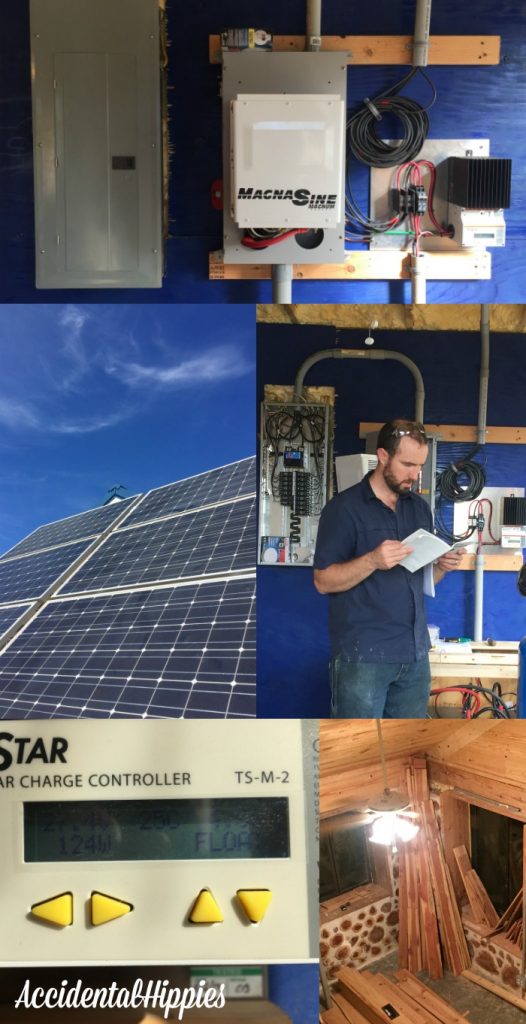
Our setup technically worked, but it was really designed for occasional cabin use, not full-time living with heavier loads like our well pump.
Mark’s newfound knowledge through Heatspring gave us a better framework for understanding how solar systems function and how to evaluate the advice you find online. Before that, we were making expensive decisions without realizing it. We chose AGM batteries for convenience, but they weren’t the right fit for how heavily we were using the system, and we overdrew them constantly without fully understanding what was happening.
If I could go back, we would spend less money rushing into equipment and more money upfront on learning and proper system design.
Heatspring is great because it has a variety of free and paid courses to choose from. Yes, you can find all of this information piecemeal on YouTube and in forums. But a course is a great way to skip the searching, consolidate information in a logical flow, and know you’re getting correct information from industry professionals.
You can go pretty far with just their free course, but if you want to go deeper or even sit the exam to get certified as a solar installer, paid is where it’s at.
Heatspring Solar Power 101 – Free Course
Solar PV Bootcamp – Paid Course
3. We wish we’d learned more about system maintenance and troubleshooting ahead of time.
Education isn’t just vital for system design — it’s critical for troubleshooting. No line worker is going to come save you if your power goes out. Congrats! You’re the power company now.
I mean, maybe you’re lucky to live in an area with solar installers who will come out to work on small residential systems. But in my experience, the vast majority of solar companies and installers won’t even return your calls if you have a home system. Most of them are working on larger commercial projects and are contracted out. If you’re off-grid, you’re small potatoes. Having the skills necessary to perform system upkeep and troubleshoot issues is essential if you’re off the grid. For that reason, I always recommend this next point:
4. We wish more folks knew to get reputable components from reputable companies.
This is one of those things where we got it half right the first time: we bought high-quality system components from major solar brands with decades of experience. Unfortunately, we purchased from a distributor that gave us poor advice before we purchased and basically no follow-up help from there. It’s important that your components AND your suppliers are high quality.
We’ve been lucky since then to work closely with manufacturers and distributors alike. For example, one of the big reasons we chose Midnite for our all-in-one inverter was because we knew that they’re a reputable company here in the US with real humans we can call whenever we have an issue. We had a few kinks to work out in the system when it was still new, and we felt confident that any time we contacted them, they’d help us solve them. We haven’t been let down yet.
If you’re looking for good places to shop for solar gear, I have a whole post about it here.
READ: Beginners Guide to Buying a Quality Solar Power Kit
5. We wish we knew how much power we really needed to live comfortably.
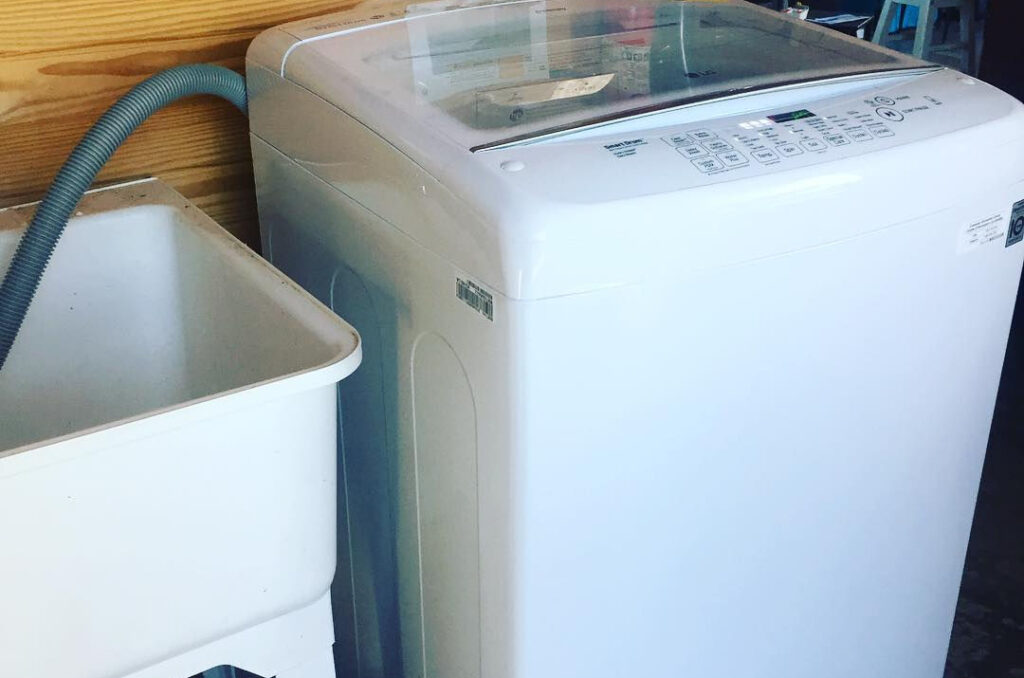
Part of living off the grid is designing a life that doesn’t use all that much power. What can you reasonably get away with? What can you do without? What can’t you do without?
Our home has most of the trappings of modern life, but with a fraction of the power consumption because we’ve chosen to go without certain loads (at least for now), including an electric clothes dryer, a deep freezer, central heating/air, and a fully electric car. Personally, we feel like we live pretty comfortably. I don’t miss having a clothes dryer 99% of the time, but that may be someone else’s dealbreaker.
We needed more power than we originally thought in order to live comfortably. But also, we don’t need nearly as much as you might think.
We overcorrected in the beginning and had a system that couldn’t quite keep up with our minimum comfort needs. That meant a lot of hot summers and depleted batteries in the winter. Our newer system has allowed us to strike a nice balance. In fact, I started looking at how much power we created and used over the first year of having this new system, and we used SO little energy compared to the average house. It’s not even close.
The original version of this section got to be so long that I determined it was actually a whole separate post, so I definitely encourage you to read that here. I provide some raw numbers and show you just how little power we use compared to the average home.
READ: How Much Power Do We Use Off-Grid?
6. We wish we knew that living off the grid wasn’t as hard as we thought it would be…
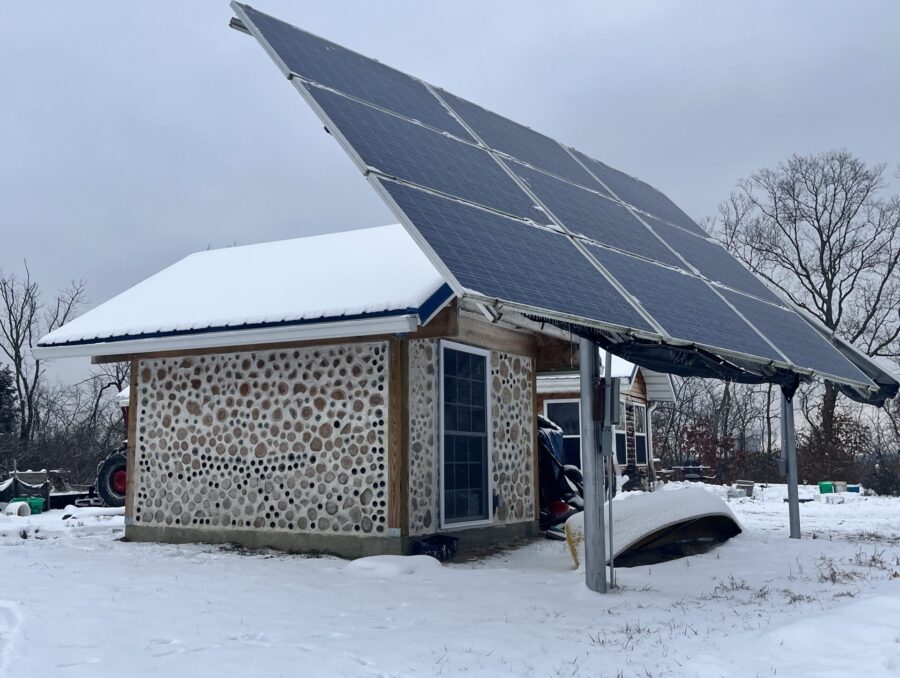
My mom says it looks like we work really hard to live off the grid, and I suppose that from her perspective, we do.
Certainly, early on with our REALLY small system, I wouldn’t have described this lifestyle as “cushy”. It was all that much more important to chop and carry firewood in the winter, maintain our passive cooling routine in the summer, and manage electrical loads so that we weren’t running any large draws at the same time. I had to carefully consider what kinds of appliances I could or couldn’t buy. When air fryers got really popular all of a sudden, I sat that trend out.
But now, I mostly check our power app out of curiosity. Our current system can run basically anything we can throw at it without flinching. The only reason I think about running my hair dryer at the same time as our water pump and AC is because I had so many years where monitoring our usage was a habit. Now, it doesn’t really matter. The only thing holding me back from an air fryer now is my lack of counterspace and distrust of non-stick coatings.
7. …but living this way is not for everyone.
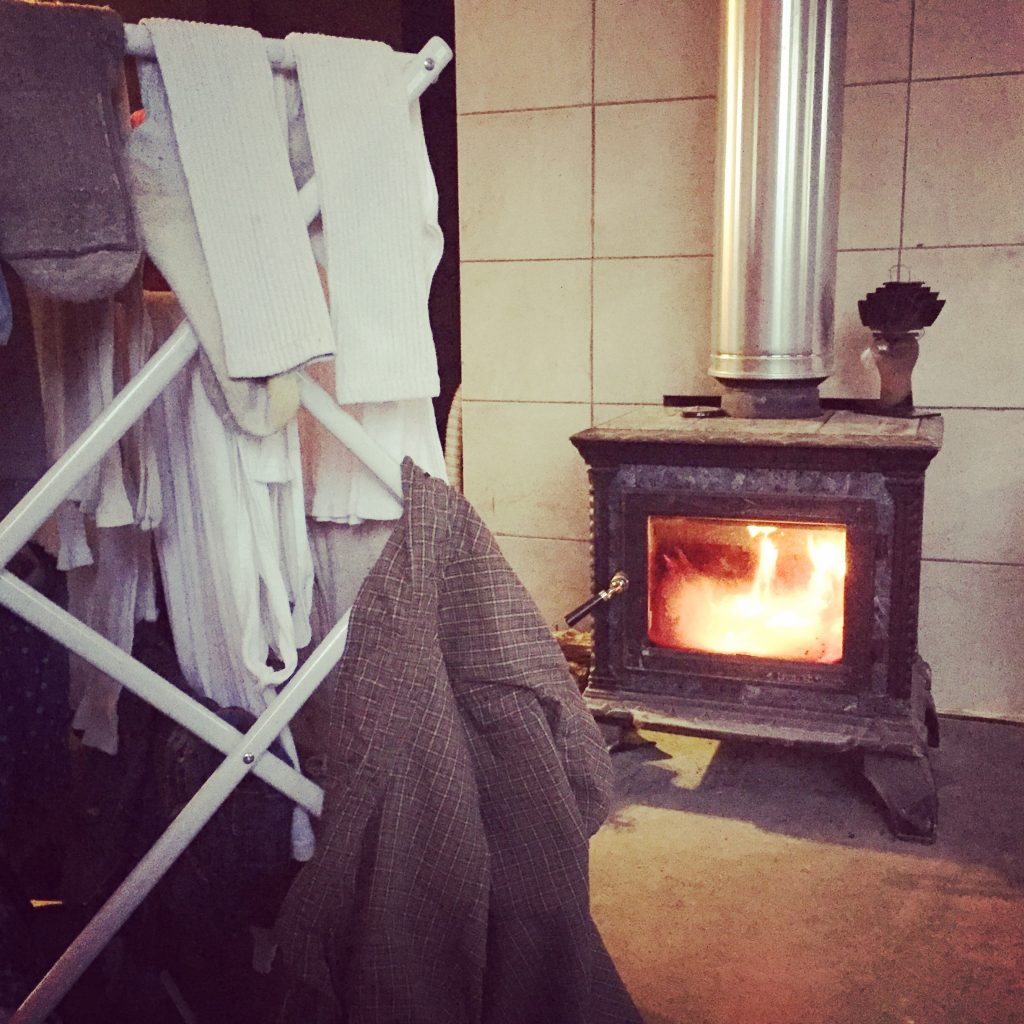
Not a single day goes by that I don’t think about how some aspect of my life would be way harder if I had something like a chronic condition or injury holding me back. That extends more to the non-solar aspects of off-grid living, like chopping/carrying firewood, shoveling snow, maintaining the driveway, and managing our acreage and the projects that come with it. But adding your own self-sufficient energy into that mix definitely doesn’t make it easier.
Going off-grid is something you really have to consider carefully. It looks really cool when you’re watching YouTube videos of solar gear and other folks’ homestead setups. Heck, I actually get really excited by OTHER people’s solar equipment (as if I don’t have my own!), so I get it.
You see a cabin in the woods with garden beds and solar panels and think YES, I want to do THAT. And to be fair, 99% of the time it’s totally awesome.
And then there’s that 1% of the time where something has gone catastrophically wrong, and all of a sudden you’re devoting an entire day you didn’t have to solve a problem you definitely wouldn’t have in a “normal” house.
Not that we didn’t have our fair share of mishaps in our city house. But our off-grid house is a lot more hands-on by default. Solar power is hands-on by default. Will we want this forever? How will either of us feel about living here if we have some sort of life-changing event that impacts our ability to manage this property? I don’t necessarily need to worry about hypotheticals, but it’s definitely worth considering and having backup plans.
There’s a greater level of self-sufficiency you sign up for when you go off the grid.
It’s not just switching your house over from the power company to a self-contained system — it’s the sneaky, unexpected lifestyle changes that come with going solar. If the prospect of having solar power and living a more self-sufficient lifestyle sounds exciting to you and you genuinely want to pursue it, then go for it! Learn as much as you can and go in with eyes wide open so you can make the most of it.
I have many more posts about our off-grid experience if you want to go down that rabbit hole with us:
- 10 Surprising Lessons We’ve Learned About Living Off The Grid
- 9 Things to Know About Off-Grid Homesteading
- Living Off Grid Into Retirement: An Interview With Two Intrepid Empty-Nesters
- Our Favorite Resources for Solar Power Beginners
- 10 Surprising Lessons We’ve Learned About Living Off The Grid (after our first year!)
If you want to dig deeper into setting up your own solar power system, I have a free PDF guide in our Members-Only Resource Library to walk you through the steps. It even provides some handy scripts you can use for talking to solar companies! Subscribe for access to that guide and all of our other free resources below:
Learn more about our original cordwood homestead project here. And be sure to join us on Pinterest, Facebook, and Instagram for more homesteading goodies that don’t necessarily make it to the blog. Thanks for reading!